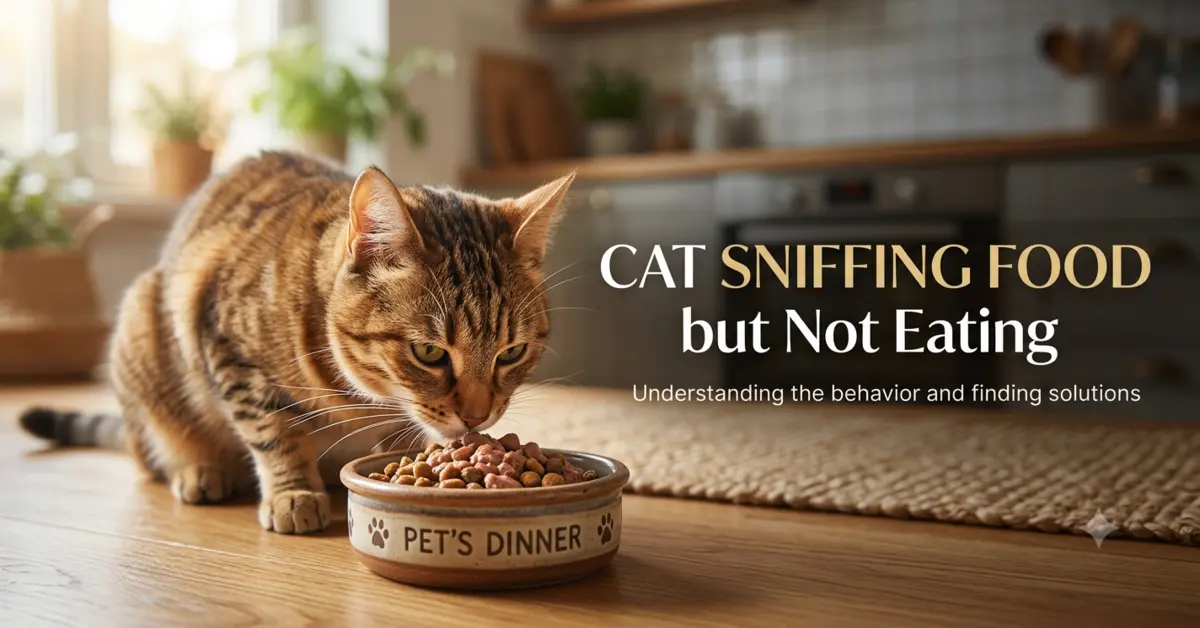
Your cat walks up to the bowl, sniffs the food, and walks away. You try a different flavor. Same result. It is frustrating, and it is also worth paying attention to. A cat that consistently sniffs food but refuses to eat it is telling you something important.
Here is what causes this behavior and exactly what you should do about it.
Healthy vs. Concerning Food Refusal: Quick Reference
| Situation | Likely Cause | Action Needed |
| Occasional refusal, eating normally otherwise | Food preference or temperature | Adjust serving temperature |
| Refusal lasting more than 24 hours | Stress, food change, or mild illness | Monitor closely |
| Refusal with weight loss or lethargy | Underlying health condition | See a vet immediately |
| Refusal of new food only | Texture or flavor rejection | Gradual transition |
| Refusal with drooling or pawing at mouth | Dental pain or nausea | See a vet immediately |
Why Cats Sniff Food Before Eating
Cats rely on their sense of smell far more than humans do. Before a cat takes a single bite, it uses scent to assess whether the food is fresh, safe, and appealing. A cat’s nose contains nearly 200 million scent receptors, making smell the primary driver of appetite.
When a cat smells food but won’t eat it, something in that scent assessment fails. The food does not pass the test. Understanding why helps you fix the problem quickly.
Reason 1: The Food Is Too Cold
This is the most common and most overlooked reason behind cat appetite loss. Wet food served straight from the refrigerator has very little aroma. Without a strong scent signal, a cat’s appetite simply does not activate.
Cats prefer food served at around room temperature or slightly warmer, closer to the natural body temperature of fresh prey. Cold food smells flat and unappealing to them regardless of the flavor.
What to Do
Take the wet food out of the refrigerator 10 to 15 minutes before serving. Alternatively, warm it briefly in a microwave-safe bowl for a few seconds. Always stir and test the temperature before placing it in front of your cat. Aim for lukewarm, never hot.
Reason 2: The Food Has Gone Stale or Spoiled
Cats detect spoilage before humans do. Wet food left in the bowl for more than two hours at room temperature starts to oxidize and develop bacterial growth. Your cat smells this immediately and refuses to eat it.
Dry kibble also goes stale faster than most owners realize. An open bag of kibble exposed to air, heat, or humidity loses its aroma quickly and becomes less appealing over time.
What to Do
Never leave wet food out for more than two hours. Refrigerate unused portions immediately and use them within 24 to 48 hours. Store dry kibble in an airtight container away from heat and direct sunlight. Check the expiry date on both wet and dry food regularly.
Reason 3: Your Cat Dislikes the Texture or Formula
Cats develop strong food preferences early in life. A cat raised on pate-style wet food often rejects shredded or gravy-based varieties simply because the texture feels wrong. The same applies in reverse.
A recent formula change by the manufacturer can also trigger refusal even when the packaging looks identical. Pet food companies occasionally adjust recipes, and cats notice these changes immediately through scent.
What to Do
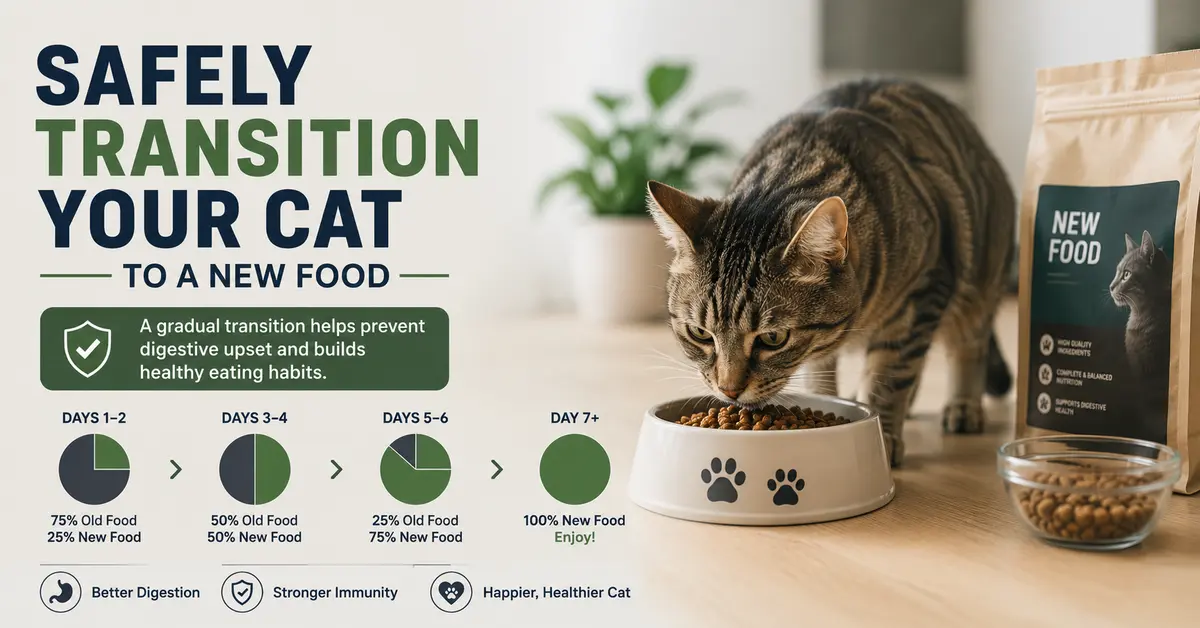
Try a different texture of the same protein. If your cat rejects pate, offer a shredded or flaked variety. If the formula seems to have changed recently, check the manufacturer’s website or try a different brand with a similar ingredient profile. Always follow a gradual transition over 7 to 10 days when introducing any new food to avoid digestive upset.
Reason 4: Stress or Environmental Changes
Cats are sensitive to changes in their environment. A new pet, a house move, a change in the owner’s schedule, loud construction nearby, or even a rearranged piece of furniture can disrupt a cat’s sense of security enough to suppress appetite.
Stress-related cat appetite loss usually resolves once the cat adjusts to the new situation. However, it can persist if the stressor remains present.
What to Do
Identify any recent changes in your home environment. Feed your cat in a quiet, consistent location away from high-traffic areas. Keep the feeding routine as predictable as possible, same time, same bowl, same location every day. If a new pet has entered the home, feed cats separately to remove competition at mealtimes.
Reason 5: Dental Pain or Mouth Discomfort
A cat experiencing dental pain, a mouth ulcer, or gum inflammation approaches food with interest but pulls back when the act of eating causes discomfort. These cats sniff eagerly because they are hungry. They refuse because eating hurts.
Watch for additional signs alongside food refusal. Drooling, pawing at the mouth, dropping food while chewing, and preference for soft food over hard kibble all point toward oral pain.
What to Do
Check your cat’s mouth gently if they allow it. Look for red or swollen gums, visible tartar buildup, or any sores on the tongue or cheek lining. If you notice any of these signs or your cat shows consistent discomfort while eating, take them to a veterinarian for a dental examination. Dental disease is one of the most common and most undertreated conditions in domestic cats.
Reason 6: Nausea or Underlying Illness
A cat that feels nauseous approaches food out of habit but cannot bring itself to eat. This is one of the most common reasons behind loss of appetite in cats, and it covers a wide range of causes, including hairballs, gastrointestinal upset, kidney disease, liver problems, and infections.
Chronic Kidney Disease is a particularly common cause of reduced appetite in senior cats. The condition causes a buildup of waste products in the bloodstream that creates a persistent feeling of nausea.
Dehydration also suppresses appetite directly. A cat not drinking enough water or eating enough moisture-rich wet food experiences reduced digestive function, which lowers the urge to eat. If your cat is refusing food and also showing warning signs of dehydration such as dry gums, sunken eyes, or reduced litter box activity, address both issues at the same time.
What to Do
Monitor your cat closely for additional symptoms. Lethargy, weight loss, increased thirst, vomiting, changes in litter box habits, and dull coat condition alongside food refusal all point toward a health condition requiring veterinary attention.
Do not wait longer than 24 hours if your cat refuses all food entirely. Cats that go without eating for more than 24 to 48 hours risk developing hepatic lipidosis, a serious and potentially fatal liver condition.
Reason 7: The Bowl Itself Is the Problem
This sounds minor but it is a genuine and well-documented cause of food refusal in cats. Deep or narrow bowls force a cat’s whiskers to press against the sides while eating. Whiskers are highly sensitive sensory organs and this contact causes discomfort known as whisker fatigue.
A cat experiencing whisker fatigue approaches the bowl, sniffs the food, and backs away repeatedly. They may also try to hook food out of the bowl with a paw to eat it off the floor instead.
What to Do
Switch to a wide, shallow bowl or a flat plate. Ceramic and stainless steel surfaces are easier to clean thoroughly and do not retain odors the way plastic bowls do. Plastic bowls also develop small scratches over time that harbor bacteria, which cats detect through scent and find off-putting.
Cat Not Eating but Acting Normal: What This Usually Means
A cat that refuses food but still plays, grooms, and behaves normally is less likely to be seriously ill. This pattern usually points toward a food preference issue, a temperature problem, a stale batch of food, or mild stress.
Still, do not dismiss it entirely. A cat refusing food for more than 24 hours, even one acting normally otherwise, needs monitoring. If the refusal extends to a second day without improvement, contact your vet.
A cat showing any additional signs of illness alongside food refusal, such as signs of dehydration, lethargy, vomiting, or hiding, needs veterinary attention the same day regardless of how normal their behavior otherwise seems.
When to See a Veterinary Immediately
Take your cat to a veterinarian if food refusal lasts longer than 24 hours, your cat loses visible weight over a short period, you notice vomiting, lethargy, or changes in water intake alongside the refusal, or your cat shows any signs of mouth pain or discomfort.
Why is my cat not eating? The answer is not always obvious at home. A vet examination rules out the conditions that require treatment and gives you a clear path forward. Early intervention always produces better outcomes.
The Bottom Line: Do Not Ignore a Cat That Sniffs and Walks Away
A cat sniffing food but not eating it is rarely random. Start with the simplest fixes first. Check the food temperature, freshen the bowl, and assess for any recent changes in environment or formula.
If the refusal persists beyond 24 hours or comes with any other symptoms, contact your vet the same day. Your cat cannot tell you something is wrong. This behavior is how they show you.