Your cat is sitting by the table, staring at your dinner like it personally owes them money. It is tempting to slip them a piece of chicken, a lick of yogurt, or a fry off your plate. But cats are obligate carnivores with a digestive system very different from ours, and some foods that seem harmless to people can put a cat in the emergency room within hours.
This guide breaks down exactly what is safe, what is dangerous, and what falls into the “fine occasionally, but don’t make it a habit” category. That way you can stop guessing every time your cat begs.
Quick answer: safe, unsafe, and “in moderation”
| Food | Verdict |
|---|---|
| Cooked plain chicken | Safe |
| Cooked plain turkey | Safe |
| Plain cooked fish (salmon, whitefish) | Safe in moderation |
| Tuna (canned, packed in water) | Occasional treat only |
| Eggs (fully cooked) | Safe in moderation |
| Plain pumpkin puree | Safe, even beneficial |
| Cheese and dairy | Moderation, many cats are intolerant |
| Onions, garlic, chives, leeks | Toxic, avoid entirely |
| Grapes and raisins | Toxic, avoid entirely |
| Chocolate and cocoa | Toxic, avoid entirely |
| Alcohol | Toxic, avoid entirely |
| Xylitol (sugar-free gum, some peanut butters) | Toxic, avoid entirely |
| Raw bread dough | Toxic, avoid entirely |
| Caffeine (coffee, tea, energy drinks) | Toxic, avoid entirely |
| Cooked bones | Unsafe, choking and splintering risk |
| Raw meat and raw eggs | Risky, carries bacterial contamination |
| Milk | Usually causes digestive upset |
Foods that are genuinely dangerous
These aren’t “give them an upset stomach” foods. These can cause organ damage, blood disorders, or death, and several require an emergency vet visit even if your cat seems fine at first.
Onions, garlic, leeks, and chives. Every member of the allium family damages a cat’s red blood cells, leading to a condition called hemolytic anemia. This applies to raw, cooked, powdered, and dehydrated forms, including onion powder in gravies, soups, and seasoned meats. Symptoms (weakness, pale gums, rapid breathing) can take a few days to appear, which is part of what makes this ingredient so easy to underestimate.
Chocolate and cocoa. Chocolate contains theobromine and caffeine, both of which cats metabolize far more slowly than humans do. Dark chocolate and baking chocolate carry the highest concentration and pose the biggest danger, but even small amounts of milk chocolate matter for a cat’s small body weight. Signs of toxicity include vomiting, an elevated heart rate, tremors, and seizures.
Grapes and raisins. Scientists still don’t fully understand the toxic mechanism in cats and dogs, but vets link grapes and raisins to acute kidney failure in both species. Because no known “safe” amount exists, the only sound advice is to keep them fully out of reach.
Alcohol. Cats have a low tolerance for ethanol, and it takes very little to cause dangerously low blood sugar, blood pressure drops, and breathing difficulty. This includes unbaked dough containing yeast, which keeps producing alcohol (and expanding) in a warm stomach.
Xylitol. This sugar substitute shows up in sugar-free gum, some peanut butters, baked goods, and toothpaste. In cats it can trigger a sharp insulin spike, leading to dangerously low blood sugar and, in some cases, liver failure.
Caffeine. Found in coffee, tea, energy drinks, and some sodas, caffeine overstimulates a cat’s nervous system and heart. Restlessness, a racing heart, and tremors count among the common early signs.
If you know or suspect your cat has eaten any of the foods above, don’t wait for symptoms to appear. Call your veterinarian or an animal poison control hotline immediately. The ASPCA Animal Poison Control Center (888-426-4435) and the Pet Poison Helpline (855-764-7661) both operate 24/7. Have the amount eaten and your cat’s weight ready if you can.
Foods that are safe in moderation
Plain cooked meat (chicken, turkey, lean beef) with no seasoning, salt, garlic, or onion ranks among the safest human foods you can offer. Keep it plain and boneless.
Cooked eggs, scrambled or hard-boiled with nothing added, provide a good source of protein. Avoid raw eggs. The salmonella risk is real, and raw egg whites can interfere with biotin absorption over time.
Plain canned pumpkin (not pie filling, which contains added sugar and spices) helps some cats with mild digestive irregularity thanks to its fiber content, and many vets recommend a small spoonful for this reason.
Small amounts of cooked fish like salmon or whitefish work fine occasionally, but fish shouldn’t become a regular meal replacement. It can run low in some nutrients cats need long term, and in the case of tuna specifically, repeated feeding can lead to mercury accumulation and a condition called steatitis (yellow fat disease).
Cheese and other dairy trip up most owners. Cats lose much of their ability to digest lactose after kittenhood, so a saucer of milk or a piece of cheese often leads straight to loose stool. If you’re dealing with this already, our guide on why wet food gives cats diarrhea covers the same lactose intolerance mechanism in more detail.
Foods that seem fine but usually aren’t
- Raw meat and raw fish carry salmonella and listeria risk, and raw fish specifically contains an enzyme that breaks down thiamine, an essential B vitamin for cats.
- Bones of any kind, cooked especially, can splinter and cause internal injury or blockages.
- Dog food, fed as a regular substitute, lacks the taurine, arachidonic acid, and vitamin A levels cats specifically require. This creates a slow, cumulative problem rather than an acute one.
- Liver in large amounts can cause vitamin A toxicity over time, even though small amounts offer good nutrition.
Why “just a little bite” adds up faster than you think
Most of these foods don’t turn dangerous because of some rare, dramatic reaction. They turn dangerous because cats are small. A piece of chocolate that would barely register for a 150 pound adult delivers a much bigger dose, pound for pound, to a 9 pound cat. That’s also why a single feeding mistake often looks fine in the moment but shows up later as vomiting, appetite changes, or digestive upset. If your cat has shown any of the following, check whether diet caused it before assuming the two are unrelated:
- Throwing up undigested food shortly after eating
- Vomiting right after meals on a recurring basis
- Sniffing food but refusing to eat it
- Eating more than usual while still losing weight
Safely introducing any new food
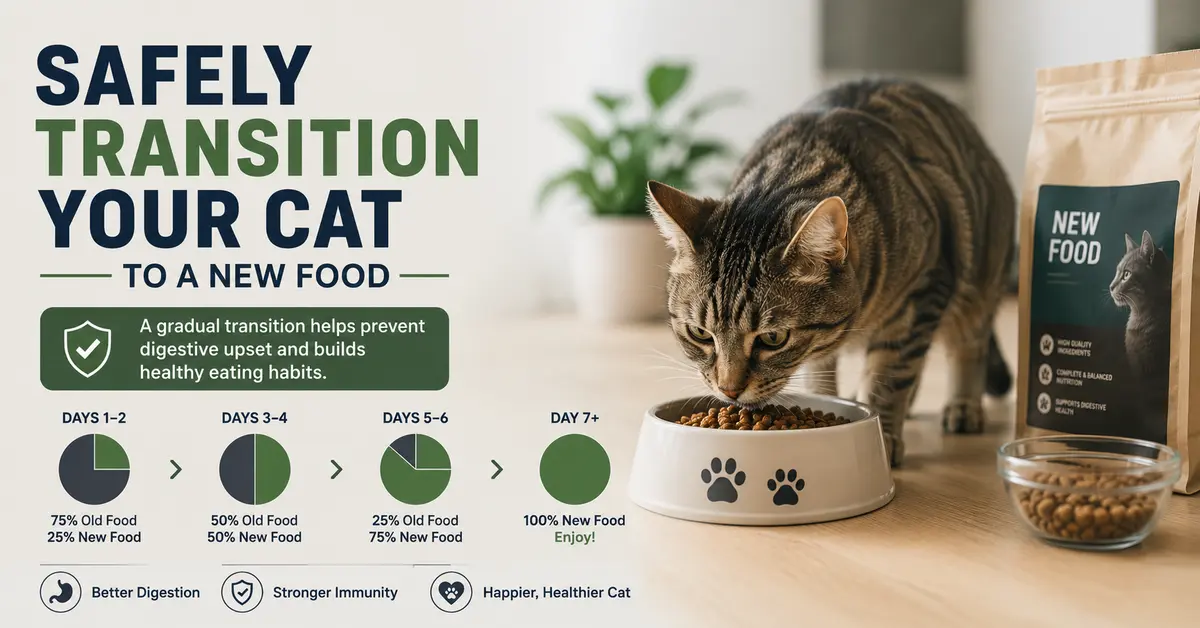
Even foods on the “safe” list can cause a reaction if you introduce them too fast or in too large a quantity. Start with a teaspoon sized amount, wait 24 hours, and watch for vomiting or loose stool before offering it again. Our guide on how to transition your cat to a new food without stomach upset covers this same principle. A cat’s gut bacteria needs time to adjust to anything new, human food included.
The bottom line
Treat human food as an occasional extra, never a substitute for a complete cat food, and keep the toxic list above somewhere you’ll actually remember it. Taping it inside a cabinet works better than trying to recall it during an emergency. When in doubt about a specific food not covered here, skip it and check with your vet rather than assume it’s fine.
Frequently Asked Questions
Can cats eat cheese?
In small amounts, occasionally. Most adult cats carry some degree of lactose intolerance, so cheese and other dairy often cause loose stool or gas even though they aren’t toxic.
Can cats eat tuna?
Yes, as an occasional treat, not a regular meal. Repeated tuna feeding can expose cats to mercury and lead to a fat inflammation condition called steatitis.
What human foods are instantly toxic to cats?
Onions, garlic, chocolate, grapes and raisins, alcohol, xylitol, caffeine, and raw bread dough top the list of common emergencies. Any of these warrants a call to your vet or a poison control hotline right away.
Can cats eat eggs?
Fully cooked eggs, yes. Raw eggs carry a salmonella risk and can interfere with biotin absorption if you feed them regularly.
Can cats eat bread?
Small amounts of plain, fully baked bread won’t hurt them, but it offers no nutritional value, and raw dough turns dangerous because of the alcohol yeast produces as it ferments in the stomach.