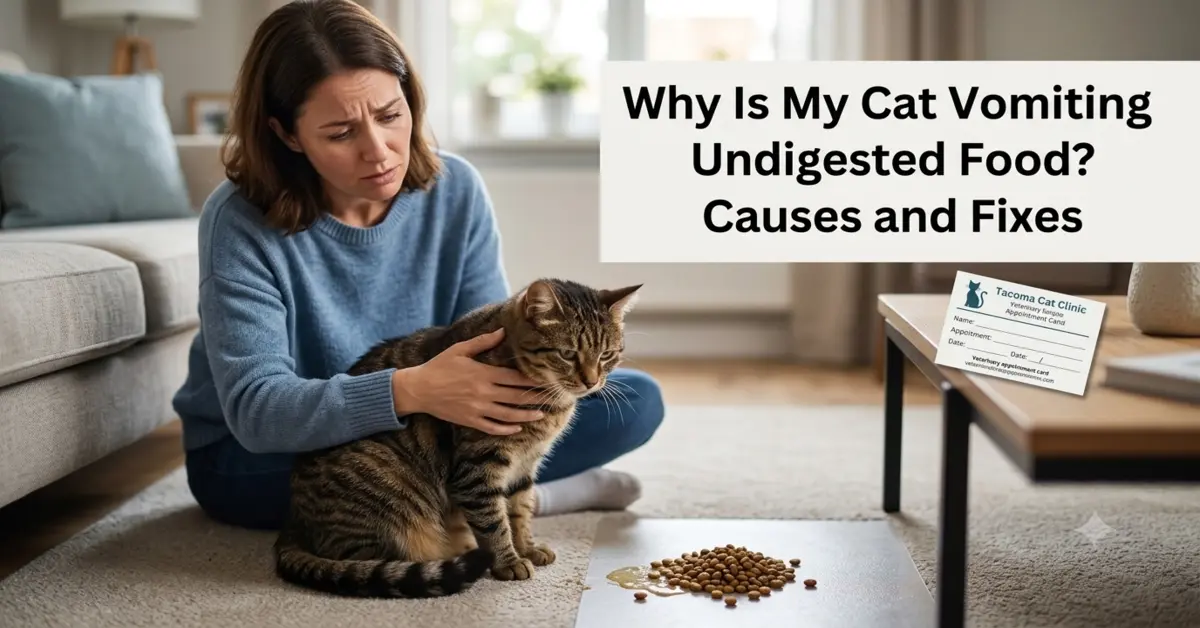
It is a sound every cat owner dreads. You just filled your pet’s bowl with fresh cat food. A few minutes later, you hear that familiar, heavy retching noise from across the room. When you look down, you find a pile of kibble that looks exactly the same as it did in the bag.
If your cat is vomiting undigested food right after eating, you are probably worried and looking for answers. It can be scary to see your furry friend reject their meal so quickly. Is it just a simple mistake from eating too fast, or is it a sign of a serious illness?
In this article, we will look at why cats throw up whole food. We will help you understand the difference between vomiting and regurgitation. Plus, you will learn easy ways to fix the problem at home and when it is time to call the vet.
Vomiting vs. Regurgitation: What Is the Difference? (H2)
Before you can help your kitty, you need to know exactly what is happening. Many owners use the word “vomiting” for everything. However, there is a big difference between a cat throwing up and a cat regurgitating. Knowing the difference helps you find the right fix.
What Does Cat Vomiting Look and Sound Like?
Vomiting is an active process. It means the food actually made it down into the stomach before coming back up.
- The Action: Your cat’s body works very hard. You will see their stomach muscles heave, squeeze, and contract.
- The Sound: Cats usually make loud, dramatic retching or gagging noises right before the fluid comes out.
- The Mess: The pile on the floor will have fluid mixed in with the food. You might see yellow bile, clear slime, or white foam. The cat food might also look partly digested or mushy.
What Does Cat Regurgitation Look and Sound Like?
Regurgitation is a passive process. This means the food never even reached the stomach. It got stuck in the esophagus, which is the tube connecting the mouth to the stomach.
- The Action: There is no warning. Your cat will simply stand up, lower their head, and the food drops out. Their stomach muscles do not squeeze at all.
- The Sound: This process is almost completely silent. You won’t hear any heavy retching sounds.
- The Mess: The rejected food usually looks exactly like it did in the bowl. It is often shaped like a tube or a cigar because it was stuck in the throat. Since it never touched stomach acid, it is usually dry and covered only in clear saliva.
Common Reasons Why Your Cat Throws Up Whole Food (H2)
When your kitty rejects their meal right away, it usually points to a few common culprits. Here is a look at the most frequent reasons why cats experience this issue.
1. Eating Too Fast (The “Scarf and Barf” Effect)
The most common reason a cat is vomiting undigested food right after eating is speed. When a cat eats too fast, they swallow large chunks of kibble without chewing. They also gulp down a lot of air.
That mixture of unchewed food and trapped air expands quickly inside the stomach. The stomach wall stretches too fast, which triggers an instant reflex to dump the food back out. This “scarf and barf” habit is very common in homes with multiple pets where cats feel they must race to finish their food.
2. Hidden Hairballs Blocking the Way
Cats are clean animals that groom themselves constantly. During grooming, their rough tongues pull away loose fur, which they swallow. Usually, this fur passes safely through the digestive tract.
Sometimes, however, a large clump of fur builds up and stays inside the stomach. This hidden hairball acts just like a cork in a bottle. When your cat swallows fresh food, it hits that hairy blockage. With nowhere else to go, the fresh cat food bounces right back up.
3. Food Allergies and Sensitive Stomachs
Just like people, some cats have a very sensitive stomach. They can develop a food allergy or an intolerance to specific ingredients in their meals.
The most common allergy triggers for cats are specific proteins like beef, dairy, fish, or chicken. If your cat’s immune system or stomach hates a certain ingredient, the gut will experience sudden inflammation. This rejection forces the body to expel the undigested food almost immediately.
4. Swallowing Foreign Objects and Toys
Cats love to play with small, stringy things. They might chew on yarn, rubber bands, hair ties, or pieces of plastic toys. If your cat accidentally swallows one of these items, it can create a dangerous intestinal blockage.
When a foreign object plugs up the stomach or intestines, nothing else can move forward. When your cat tries to eat or drink, the new meal hits that wall, causing them to throw up whole food.
5. Underlying Medical and Health Conditions
Sometimes, throwing up whole food is not a stomach issue at all. It can be a warning sign of a deeper, chronic illness. These conditions can slow down how fast the stomach empties, or they can cause intense, sudden nausea.
Common medical issues that cause this include:
- Inflammatory Bowel Disease (IBD), which causes constant gut swelling.
- Kidney disease, which allows toxins to build up in the blood.
- Pancreatitis, which is a painful swelling of the pancreas.
- Hyperthyroidism, which speeds up the body’s metabolism and alters appetite.
Simple Solutions You Can Try at Home
If your cat is still happy, playing, and acting like their normal self, you can try making a few simple changes at mealtime. These quick fixes can help soothe a sensitive stomach and stop the “scarf and barf” cycle.
Switch to a Slow Feeder or Food Puzzle
If your cat loves to rush through dinner, a standard bowl might be the problem. Try switching to a slow feeder or a food puzzle. These special dishes have ridges, mazes, or small cups inside them.
Your cat will have to use their paws or tongue to move each piece of kibble out of the maze. This slows down their eating speed drastically. It prevents them from swallowing air and gives their brain time to realize that their stomach is full.
Change Your Cat’s Feeding Schedule
Giving your cat one or two big meals a day can lead to overeating. Instead, try changing their feeding schedule to offer smaller, more frequent meals.
You can split their daily amount of cat food into four or five tiny portions spread out across the day. If you work away from home, an automatic pet feeder can handle this for you. Smaller meals put much less stress on the stomach wall, making it easier for your kitty to keep food down.
Raise Your Cat’s Food Bowl
When a cat eats from a bowl on the floor, they have to crouch low. This forces their throat and esophagus into a downward slope. Gravity can work against them, making it easy for food to get stuck and come back up.
Try putting their food dish on a raised platform or buying an elevated, tilted pet bowl. Raising the bowl a few inches off the floor helps their posture. It lets gravity do the work, helping the food slide smoothly down into the stomach.
Increase Your Brushing and Grooming Routine
If hairballs are causing the blockage, the best fix is to remove the fur before your cat can lick it off. Start brushing your cat more often, especially if they have long hair or are shedding heavily.
Taking just five minutes a day to brush away loose coat hairs makes a massive difference. Fewer loose hairs on your cat means fewer hairballs in their tummy, which means a much happier digestive system.
When Should You Call Your Veterinarian?
While an occasional upset stomach can happen, you should never ignore a cat that frequently throws up their meals. Sometimes, a trip to the vet is the only way to get your furry friend the right help.
Warning Signs and Red Flags to Watch For
You should monitor your kitty closely after they eat. If you notice any of the following serious red flags, skip the home remedies and call your veterinarian right away:
- Frequent Vomiting: Your cat throws up multiple times in a single day or vomits consistently every week.
- Signs of Pain or Lethargy: Your cat is hiding, sleeping much more than usual, or crying out in discomfort.
- Changes in Appetite or Thirst: They completely refuse to eat their cat food, or they suddenly start drinking massive amounts of water.
- Weight Loss: Your cat is visibly losing weight or feeling skinnier along their spine.
- Blood in the Vomit: You see bright red blood streaks or dark flecks that look like coffee grounds in the mess.
- Other Symptoms: Your cat also has diarrhea, a fever, or warm, pink ears that point to an infection.
Final Thoughts on Feline Digestion
At the end of the day, a cat throwing up their dinner is a sign that their digestive system needs a little help. Feline digestion can be very delicate. Watch your cat’s habits closely. This helps you spot quick eating, hairballs, or food allergies early.
Most of the time, simple changes like a slow feeder or smaller meals can fix the problem. However, always trust your gut. If your pet seems unhappy or shows any warning signs, do not hesitate to reach out to a professional. Keeping your furry companion happy, healthy, and well-fed is always worth the effort.