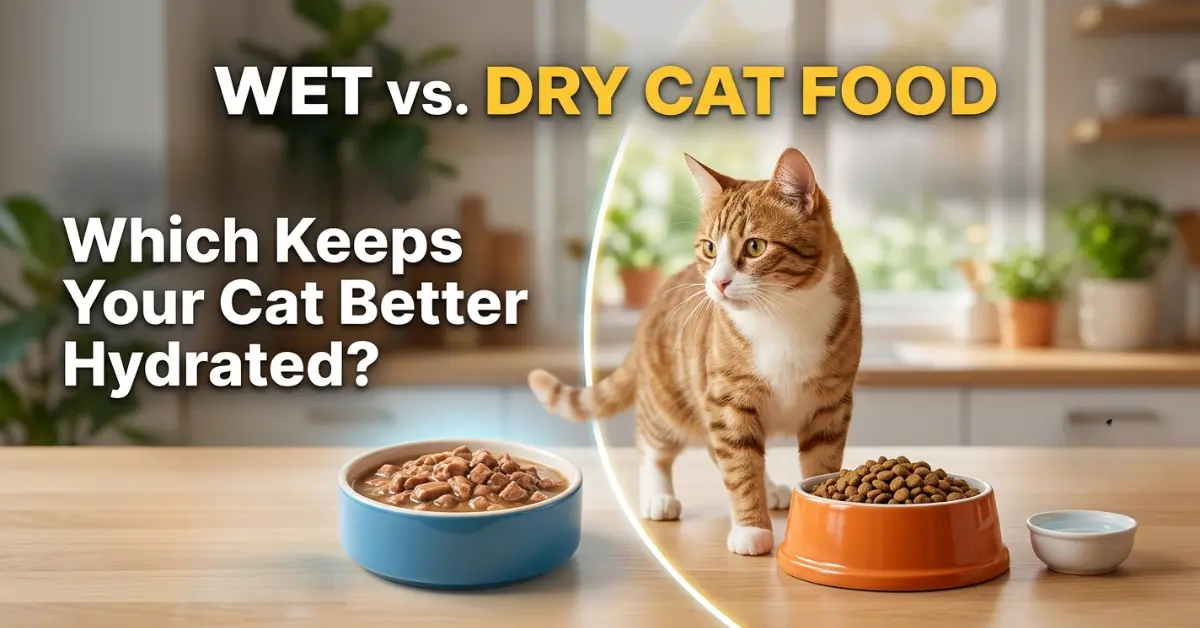
Most cat owners assume their cat drinks enough water. The reality is most cats are quietly dehydrated every single day. It does not always show up immediately. But over months and years, low fluid intake quietly damages the kidneys, strains the urinary tract, and shortens a cat’s healthy lifespan.
The food in your cat’s bowl is the single biggest factor in how hydrated they actually stay. And the difference between wet and dry food on this front is not small. It is significant.
This guide covers everything you need to make a confident, informed choice for your cat.
Wet vs. Dry Cat Food: A Quick Comparison
| Feature | Wet Cat Food | Dry Cat Food |
| Moisture Content | 75 to 82% | 6 to 10% |
| Hydration Support | High | Low |
| Urinary Health | Strongly supportive | Risk increases without extra water |
| Kidney Health | Beneficial | Neutral to risky long-term |
| Shelf Life | Short after opening | Long |
| Cost Per Serving | Higher | Lower |
| Best For | Senior cats, male cats, indoor cats | Budget-conscious owners, supplement feeding |
Why Your Cat Is Probably Not Drinking Enough Water
Cats are descended from desert-dwelling wild cats. Their bodies evolved to extract moisture from prey rather than drinking from standing water sources. This means their thirst drive is naturally weak.
A domestic cat eating dry kibble all day and sitting next to a single water bowl is biologically not motivated to drink enough. Veterinary nutrition research consistently shows that cats on dry-only diets consume significantly less total fluid than cats eating wet food.
The result is chronically concentrated urine. And concentrated urine is where the problems begin.
How Moisture Content Actually Works
Wet cat food contains 75 to 82% water. When your cat eats a standard 3 oz can, they are consuming roughly 2.4 oz of water alongside their meal without even approaching the water bowl.
Dry kibble sits at 6 to 10% moisture. A cat relying entirely on dry food needs to drink a substantial amount of water independently to compensate. According to veterinary nutritionists, most cats on dry-only diets fall well short of this target every single day.
This is not a minor gap. It represents a meaningful difference in long-term organ health.
What Happens Inside Your Cat’s Body When They Stay Dehydrated
Short-term dehydration causes fatigue and reduced appetite. Most owners write this off as the cat having an off day.
Long-term dehydration is far more damaging. The kidneys are under constant strain when urine is too concentrated. Over time this accelerates kidney deterioration, a condition that affects an estimated 30 to 40% of cats over the age of 10, according to studies in veterinary nephrology.
Chronic dehydration also causes urinary tract inflammation, increases the likelihood of crystal and stone formation, and leads to constipation, a painful and often overlooked condition in cats that quietly worsens for months before owners notice.
Wet Food and Kidney Health: What the Research Shows
The connection between wet food and kidney health is well established in veterinary nutrition. Cats fed primarily wet diets produce more dilute urine. Dilute urine places less stress on kidney tissue and reduces the concentration of minerals that form crystals and stones.
Veterinary nutrition studies suggest that transitioning cats with early-stage kidney disease to a wet food diet can slow the progression of the condition meaningfully. For healthy cats, a wet food diet is considered one of the most practical preventive measures available.
This is not a minor lifestyle preference. It is a dietary decision with measurable long-term health consequences.
Does Dry Food Have Any Real Advantages?
Dry food is not without merit. It is more affordable per serving, easier to store, and has a much longer shelf life after opening. Some prescription dry formulas are also specifically designed to support dental health by reducing tartar buildup, though the clinical evidence on this is mixed.
For households managing multiple cats or working within a tight budget, dry food remains a practical and widely used option.
The key is not treating dry food as a standalone hydration strategy. If dry food makes up the majority of your cat’s diet, exceptional water access is non-negotiable.
The Right Way to Mix Both Foods
Many veterinarians recommend a combination approach rather than an all-or-nothing switch. Wet food served once or twice daily covers the hydration gap, while dry food remains available between meals for convenience and cost management.
This balance works well for most healthy adult cats. It keeps daily fluid intake at a safer level without requiring a complete dietary overhaul.
The ratio can be adjusted based on your cat’s specific health needs, age, and how readily they drink from a water source.
Which Cats Need Wet Food the Most
Male Cats
Male cats have a significantly narrower urethra than females. This anatomy makes them far more prone to urinary blockages, a condition that can become life-threatening within 24 to 48 hours if untreated.
Dry food raises urine concentration. In male cats, concentrated urine accelerates crystal formation inside the urinary tract. Those crystals can block urine flow entirely. Switching a male cat to primarily wet food is one of the most direct steps an owner can take to reduce this risk.
Senior Cats
Kidney efficiency declines naturally with age. A cat aged 10 or older cannot process concentrated urine the way a younger cat can. For senior cats, wet food moves from being a preference to being a health requirement.
Veterinarians regularly recommend transitioning senior cats to wet food even when no kidney disease has been diagnosed yet. Prevention is significantly easier and less expensive than treatment.
Indoor Cats
Outdoor cats move more, sometimes hunt, and occasionally find independent water sources. Indoor cats rely entirely on what their owner provides.
An indoor cat spending most of the day inactive, eating dry kibble, and drinking from one bowl in the kitchen is at a higher hydration risk than most owners recognize. Adding wet food to an indoor cat’s daily routine is a simple, effective intervention.
Cats With a History of Urinary Issues
Any cat that has experienced a urinary tract infection, bladder stones, or crystals should be on a primarily wet food diet. The risk of recurrence on a dry-only diet is considerably higher.
Not All Wet Cat Foods Are the Same
Wet food covers a wide range of products. Pate, gravy, broth, and shredded varieties all sit under the same category but differ meaningfully in moisture content and nutritional quality.
Pate-style wet food typically delivers the highest moisture content and the most consistent texture. Gravy-based options are popular with picky eaters but sometimes contain more thickeners and fillers that reduce overall nutritional value.
When selecting wet food, check the guaranteed analysis panel on the label. Look for moisture content listed above 75%. A named protein source such as chicken, turkey, or salmon should appear as the first ingredient.
Avoid products where water or broth is listed as the primary ingredient with no significant protein following it. High moisture content with low protein density does not serve your cat’s full nutritional needs.
How to Tell If Your Cat Is Dehydrated Right Now
These are practical signs worth checking regularly:
- Gums feel dry or tacky rather than moist and slick
- Skin at the back of the neck does not snap back quickly when gently lifted
- Urine in the litter box appears very dark or has a strong odor
- Your cat seems unusually lethargic or loses interest in food
- Fewer litter box visits than normal over 24 hours
If more than one of these signs is present consistently, a veterinary visit is the right next step. Dehydration in cats compounds quickly, and early intervention makes a meaningful difference.
Simple Ways to Boost Hydration Regardless of Diet
Switching to wet food is the most effective solution. But there are additional steps that support better hydration across any diet.
Replace a static water bowl with a pet water fountain. Moving water is significantly more attractive to cats than still water, rooted in their instinct to avoid stagnant sources in the wild.
Place water sources in multiple locations around the home. Cats are more likely to drink when water is nearby and convenient rather than requiring a deliberate trip to one fixed spot.
Keep the water bowl away from the food bowl. In nature, cats do not eat and drink in the same location. Separating them can increase drinking frequency noticeably.
Adding a small amount of low-sodium chicken or fish broth to dry food increases moisture intake without requiring a full dietary switch.
The Real Cost of Feeding Dry Food Only
Wet food costs more per serving. That is a straightforward fact. However, the financial picture shifts when long-term health costs are considered.
A single emergency visit for a urinary blockage costs between $1,000 and $3,000 depending on severity and the clinic. Ongoing management of chronic kidney disease involves regular blood panels, prescription diets, and sometimes fluid therapy, all of which accumulate significantly over time.
Many cat owners who transitioned to wet food following a health crisis report that the increase in monthly food costs was far smaller than the veterinary bills they had been managing.
Investing in hydration through food is, in most cases, considerably cheaper than treating the conditions that poor hydration causes.
How to Transition Your Cat From Dry to Wet Food
Cats are habitual eaters. An abrupt switch frequently results in rejection, digestive upset, and stress for both the cat and the owner.
A gradual transition over 7 to 10 days works reliably for most cats. Begin by mixing a small amount of wet food into the existing dry kibble. Increase the wet food proportion slightly every two days while reducing the dry portion at the same rate.
Warming wet food to just below room temperature before serving makes it more aromatic and appealing, particularly for cats that have eaten dry food exclusively for a long time.
Some cats, especially older ones, take up to three weeks to fully accept a new food format. Consistency and patience during this period lead to a successful transition in the majority of cases.
Final Thoughts
The evidence is clear. Wet food keeps cats better hydrated, supports kidney function, reduces urinary health risks, and is particularly important for male cats, senior cats, and indoor cats.
Dry food is a practical supplement, not an ideal standalone diet from a hydration standpoint.
If your cat is currently eating only dry food, the single most impactful change you can make today is adding one serving of wet food to their daily routine. You do not need to overhaul everything at once. Start small, transition gradually, and pay attention to how your cat responds.
Your cat cannot tell you they are thirsty. Their food should do that job for them.
One thought on “Wet vs. Dry Cat Food: Which Keeps Your Cat Better Hydrated?”
Comments are closed.