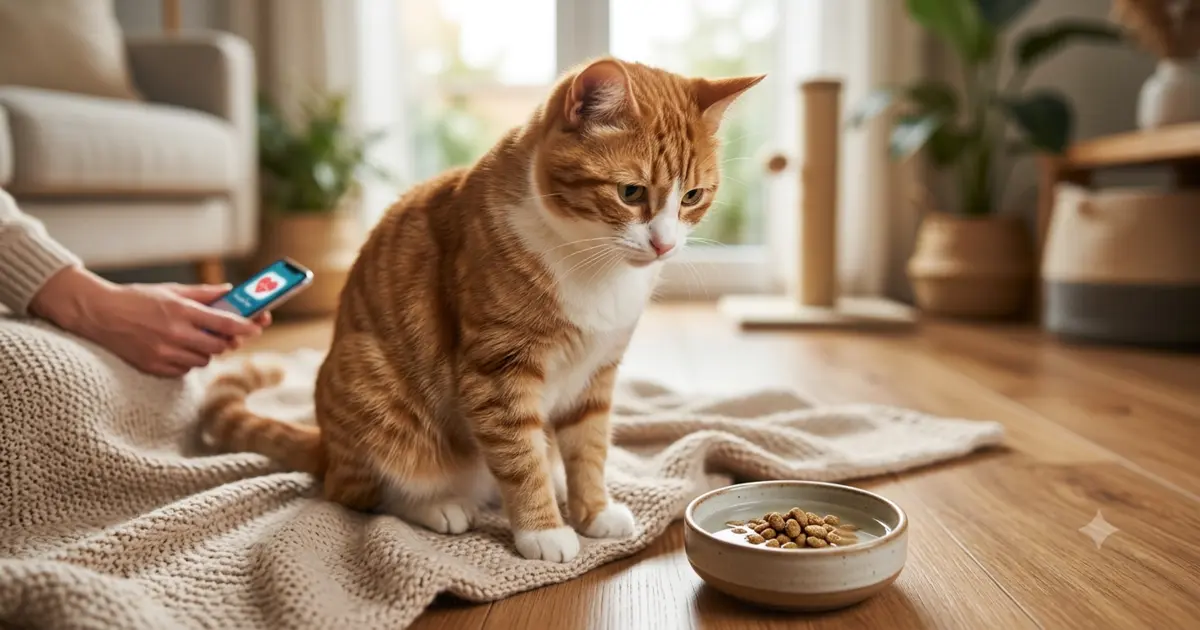
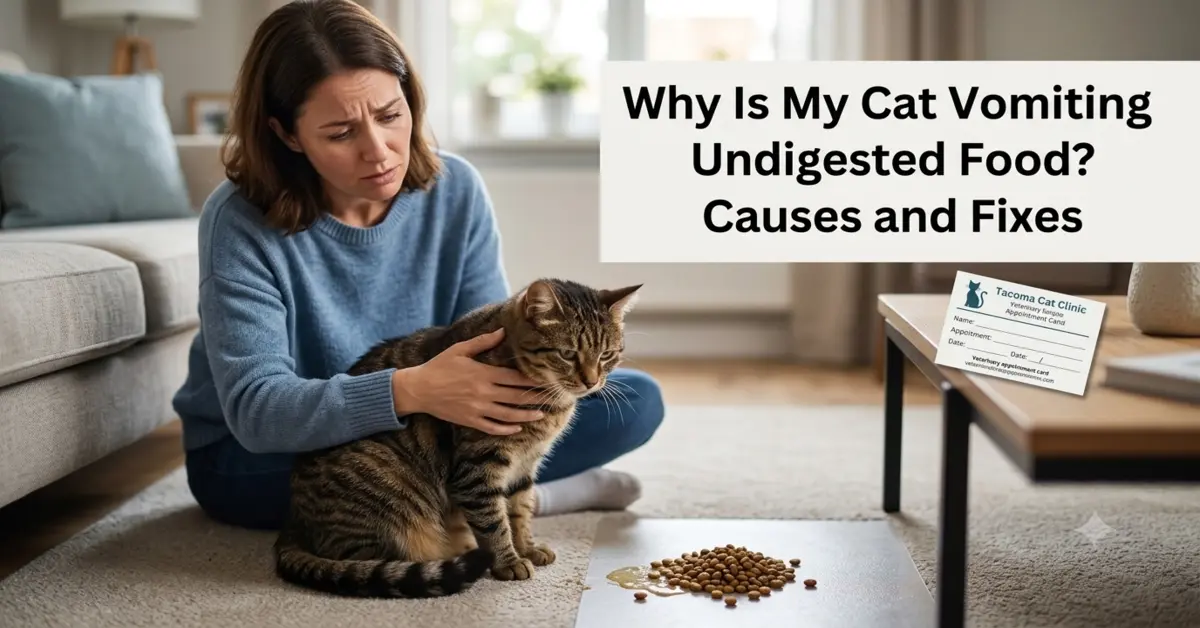
Cats throw up from time to time, but seeing undigested food in the vomit can leave many owners wondering if it’s something serious. Did your cat eat too fast? Is the food causing digestive problems? Or could it be a sign of an underlying illness?
In many cases, what looks like vomiting is actually regurgitation, which happens before food reaches the stomach. However, repeated episodes, weight loss, or other symptoms may point to a digestive disorder or another medical condition that requires veterinary care.
This guide explains why is my cat throwing up undigested food, how to tell the difference between regurgitation and vomiting, common causes, home care tips, and when it’s time to contact your veterinarian.
Quick Answer
If your cat throws up undigested food immediately or within 30 minutes after eating, they may have eaten too quickly, swallowed large pieces of food, or experienced regurgitation from the esophagus. Occasional episodes are often harmless, but repeated vomiting, weight loss, lethargy, blood in the vomit, or difficulty swallowing should always be evaluated by a veterinarian.
Regurgitation vs. Vomiting: Understanding the Difference
Although many cat owners use the terms interchangeably, regurgitation and vomiting are different processes.
| Regurgitation | Vomiting |
|---|---|
| Happens before food reaches the stomach | Happens after food reaches the stomach |
| Food usually looks whole and undigested | Food is partially digested |
| Little or no retching | Often involves gagging and abdominal contractions |
| Usually occurs shortly after eating | Can happen hours after eating |
A cat that simply lowers its head and brings up whole pieces of food without much effort is more likely regurgitating. Vomiting usually involves visible heaving, drooling, and stomach contractions before food is expelled.
Understanding which one your cat is experiencing helps your veterinarian narrow down the possible causes.
Common Signs That Accompany Vomiting
Besides bringing up food, you may notice other symptoms depending on the underlying cause.
Common signs include:
- Throwing up shortly after eating
- Loss of appetite
- Eating too quickly
- Weight loss
- Diarrhea
- Lethargy
- Excessive drooling
- Difficulty swallowing
- Hairballs
- Dehydration
- Changes in litter box habits
If your cat develops several of these symptoms together, the problem is more likely to require medical evaluation.
1. Eating Too Fast
One of the most common reasons cats throw up undigested food is simply eating too quickly.
Cats that gulp their food often swallow air along with large pieces of kibble or wet food. The stomach or esophagus may not be able to handle the rapid intake, causing food to come back up almost immediately.
This is especially common in:
- Multi-cat households
- Cats that compete for food
- Former stray cats
- Cats fed only once or twice daily
How to slow your cat down
- Feed smaller meals more often.
- Use a slow-feeder bowl.
- Try a food puzzle.
- Spread wet food across a wide plate.
- Feed cats separately if competition is a problem.
Many owners notice improvement within a few days after slowing their cat’s eating speed.
2. Switching Foods Too Quickly
Cats have sensitive digestive systems, and sudden diet changes can upset their stomach.
Whether you’re introducing a new wet food, changing protein sources, or switching brands, a gradual transition helps the digestive tract adjust.
Recommended transition schedule
| Days | Old Food | New Food |
|---|---|---|
| 1–2 | 75% | 25% |
| 3–4 | 50% | 50% |
| 5–6 | 25% | 75% |
| 7+ | 0% | 100% |
If vomiting begins shortly after changing foods, return to the previous diet and speak with your veterinarian before trying another transition.
3. Hairballs
Hairballs are another common reason cats vomit.
During grooming, cats swallow loose hair. Most of it passes through the digestive tract without problems, but some accumulates inside the stomach.
As the hair builds up, it irritates the stomach lining and can trigger vomiting.
Long-haired breeds like Maine Coons, Persians, and Ragdolls are generally more prone to hairballs than short-haired cats.
Ways to reduce hairballs
- Brush your cat regularly.
- Increase moisture intake with wet food.
- Encourage proper hydration.
- Ask your veterinarian whether a hairball-control diet is appropriate.
4. Food Intolerance or Food Allergy
Not every digestive problem is caused by eating too fast.
Some cats have difficulty digesting certain ingredients, while others develop food allergies.
Food intolerance usually affects digestion.
Food allergies often involve both digestive and skin symptoms.
Possible trigger ingredients include:
- Chicken
- Beef
- Fish
- Dairy products
- Eggs
- Certain grains (less commonly)
Signs may include:
- Vomiting
- Diarrhea
- Itchy skin
- Ear infections
- Excessive grooming
- Poor coat quality
Your veterinarian may recommend an elimination diet to determine whether food is contributing to the problem.
5. Eating Too Much in One Sitting
Overeating stretches the stomach and slows digestion.
This can cause recently eaten food to come back up before it has been properly digested.
This commonly happens when:
- Cats skip meals.
- Owners provide very large portions.
- Multiple cats compete for food.
- Free-fed cats suddenly overeat.
Offering measured meals throughout the day usually helps prevent overeating.
6. Gastrointestinal Disease
Persistent vomiting should never be considered normal.
Diseases affecting the stomach or intestines can interfere with digestion and nutrient absorption.
Examples include:
- Inflammatory bowel disease (IBD)
- Gastritis
- Stomach ulcers
- Chronic intestinal inflammation
- Gastrointestinal infections
Cats with digestive diseases often show additional symptoms, including:
- Chronic vomiting
- Weight loss
- Poor appetite
- Diarrhea
- Dull coat
- Low energy
Unlike occasional regurgitation, gastrointestinal disease generally requires diagnostic testing and treatment from a veterinarian.
7. Intestinal Parasites
Parasites remain a common cause of digestive upset, particularly in kittens and outdoor cats.
Common parasites include:
- Roundworms
- Hookworms
- Tapeworms
- Giardia
In addition to vomiting, affected cats may experience:
- Diarrhea
- Pot-bellied appearance
- Weight loss
- Poor growth
- Poor coat condition
Routine parasite prevention and fecal testing can help detect these infections early.
8. Esophageal Disorders
Sometimes the problem isn’t the stomach at all.
Disorders affecting the esophagus can prevent food from reaching the stomach normally.
Examples include:
- Megaesophagus
- Esophageal inflammation
- Esophageal narrowing (strictures)
- Foreign objects lodged in the esophagus
Cats with these conditions often regurgitate whole food almost immediately after eating.
They may also:
- Swallow repeatedly
- Drool excessively
- Struggle to eat
- Lose weight over time
These conditions require veterinary diagnosis and should not be treated with home remedies alone.
9. Underlying Medical Conditions
Repeated vomiting can sometimes indicate disease outside the digestive tract.
Conditions that may cause vomiting include:
- Kidney disease
- Liver disease
- Pancreatitis
- Hyperthyroidism
- Diabetes
- Certain cancers
These illnesses usually involve other symptoms, such as increased thirst, appetite changes, weight loss, or changes in urination.
Because these diseases become more common as cats age, senior cats with persistent vomiting should receive a veterinary examination promptly.
When Should You Worry?
An occasional episode of vomiting or regurgitation isn’t always a cause for alarm, especially if your cat quickly returns to normal behavior. However, frequent vomiting or additional symptoms should never be ignored.
Contact your veterinarian if your cat:
- Vomits more than once in 24 hours
- Throws up undigested food after every meal
- Has blood in the vomit
- Cannot keep food or water down
- Appears weak or unusually sleepy
- Stops eating for more than 24 hours
- Has persistent diarrhea along with vomiting
- Loses weight without explanation
- Shows signs of dehydration
- Has difficulty swallowing
Emergency: If your cat is repeatedly trying to vomit but nothing comes up, has severe abdominal pain, collapses, or has trouble breathing, seek emergency veterinary care immediately.
How Veterinarians Diagnose the Cause
Because many conditions can cause vomiting, your veterinarian will start by asking questions about your cat’s symptoms.
Be prepared to answer:
- When did the vomiting start?
- Does your cat vomit immediately after eating or hours later?
- Is the food undigested or partially digested?
- Has your cat recently changed foods?
- Are there any other symptoms like diarrhea or weight loss?
- Does your cat go outdoors?
Depending on the findings, your veterinarian may recommend:
- A physical examination
- Blood tests
- Urinalysis
- Fecal examination for parasites
- X-rays
- Ultrasound
- Endoscopy (in some cases)
These tests help identify whether the problem involves the digestive tract, kidneys, liver, thyroid, or another organ system.
Treatment Depends on the Cause
There isn’t a single treatment that works for every cat because vomiting is a symptom, not a disease.
Here are some common treatment approaches:
| Cause | Possible Treatment |
|---|---|
| Eating too fast | Slow-feeder bowl, smaller meals |
| Hairballs | Regular brushing, increased hydration, hairball diet |
| Food intolerance | Elimination diet or limited-ingredient food |
| Parasites | Prescription deworming medication |
| Gastrointestinal disease | Medication and dietary management |
| Dehydration | Fluid therapy |
| Esophageal disorders | Specialized feeding techniques and medical treatment |
| Kidney disease or hyperthyroidism | Long-term medical management |
Never give human anti-nausea medications or over-the-counter remedies unless your veterinarian specifically instructs you to do so. Many medications that are safe for people can be harmful to cats.
What You Can Do at Home
If your cat vomits once, seems comfortable afterward, and continues eating and drinking normally, you can monitor them closely for the next 24 hours.
Helpful steps include:
- Feed smaller meals more frequently.
- Use a slow-feeder bowl if your cat eats quickly.
- Make sure fresh water is always available.
- Introduce new foods gradually over 7–10 days.
- Brush your cat regularly to reduce swallowed hair.
- Keep string, ribbon, rubber bands, and small toys out of reach.
- Monitor appetite, energy level, and litter box habits.
Avoid withholding food for long periods unless your veterinarian recommends it. Cats can develop serious liver problems if they stop eating for too long.
Can Wet Food Help Reduce Vomiting?
For some cats, yes.
Wet food contains significantly more moisture than dry kibble, which helps support hydration and may improve digestion in some cats. It can also be easier to chew and swallow, especially for older cats or those with dental issues.
However, wet food isn’t a cure for vomiting. If the underlying problem is an intestinal disease, food allergy, parasites, or another medical condition, changing to wet food alone won’t solve it.
Choose a complete and balanced diet that meets your cat’s nutritional needs, and consult your veterinarian before making major dietary changes.
How to Help Prevent Future Episodes
While not every cause is preventable, these habits can reduce the risk of digestive upset.
Feed Appropriate Portions
Large meals are more likely to cause regurgitation. Divide your cat’s daily food into two to four smaller meals whenever possible.
Slow Down Fast Eaters
Puzzle feeders and slow-feeder bowls encourage cats to eat at a healthier pace.
Brush Regularly
Routine grooming reduces the amount of hair your cat swallows, helping minimize hairballs.
Transition Foods Slowly
Whenever you change diets, make the switch gradually over at least one week.
Keep Fresh Water Available
Good hydration supports healthy digestion and overall well-being.
Schedule Regular Veterinary Checkups
Annual or semiannual examinations can help identify health problems before they become more serious.
Common Causes at a Glance
| Cause | Usually Serious? | Can You Try Home Care? |
|---|---|---|
| Eating too fast | Usually no | Yes |
| Hairballs | Usually no | Yes |
| Sudden food change | Usually no | Yes |
| Overeating | Usually no | Yes |
| Food intolerance | Sometimes | After veterinary guidance |
| Parasites | Yes | Veterinary treatment needed |
| Gastrointestinal disease | Yes | Veterinary treatment needed |
| Esophageal disorders | Yes | Veterinary treatment needed |
| Kidney disease, hyperthyroidism, pancreatitis | Yes | Veterinary treatment needed |
Frequently Asked Questions
Why does my cat throw up undigested food but act normal?
Many healthy cats regurgitate occasionally because they eat too quickly or swallow large pieces of food. If it happens only once in a while and your cat otherwise behaves normally, it may not indicate a serious problem. Frequent episodes should still be evaluated by a veterinarian.
Is it normal for cats to throw up after eating?
Occasional vomiting or regurgitation can happen, but it shouldn’t occur regularly. Cats that throw up after meals every week—or after every meal—should be examined to determine the underlying cause.
Should I stop feeding my cat after vomiting?
Not necessarily. Unless your veterinarian advises otherwise, offer a small meal once your cat has settled and monitor for further vomiting. If your cat cannot keep food or water down, contact your veterinarian promptly.
Can stress make cats vomit?
Yes. Changes in routine, moving to a new home, introducing another pet, or other stressful events can contribute to digestive upset in some cats. However, stress should not be assumed to be the cause until medical conditions have been ruled out.
Does dry food cause vomiting?
Dry food itself doesn’t automatically cause vomiting, but some cats eat dry kibble too quickly, leading to regurgitation. Individual sensitivities, portion sizes, and underlying health conditions are often more important than the food type alone.
When should I take my cat to the veterinarian?
Seek veterinary care if vomiting becomes frequent, your cat loses weight, has blood in the vomit, appears lethargic, cannot keep food or water down, or develops other concerning symptoms.
Final Thoughts
Seeing your cat throw up undigested food can be worrying, but the cause isn’t always serious. Fast eating, hairballs, and sudden diet changes are among the most common explanations and can often be managed with simple adjustments at home.
However, vomiting should never be ignored when it becomes frequent or is accompanied by symptoms such as weight loss, diarrhea, lethargy, dehydration, or difficulty swallowing. In those cases, a veterinary examination is the safest way to identify the underlying cause and begin appropriate treatment.
Paying attention to when your cat vomits, what the vomit looks like, and how often it happens can provide valuable information for your veterinarian. Early evaluation and appropriate care can help your cat recover more quickly and reduce the risk of more serious complications.

One thought on “Why Is My Cat Throwing Up Undigested Food? 9 Common Causes and What You Should Do”
Comments are closed.