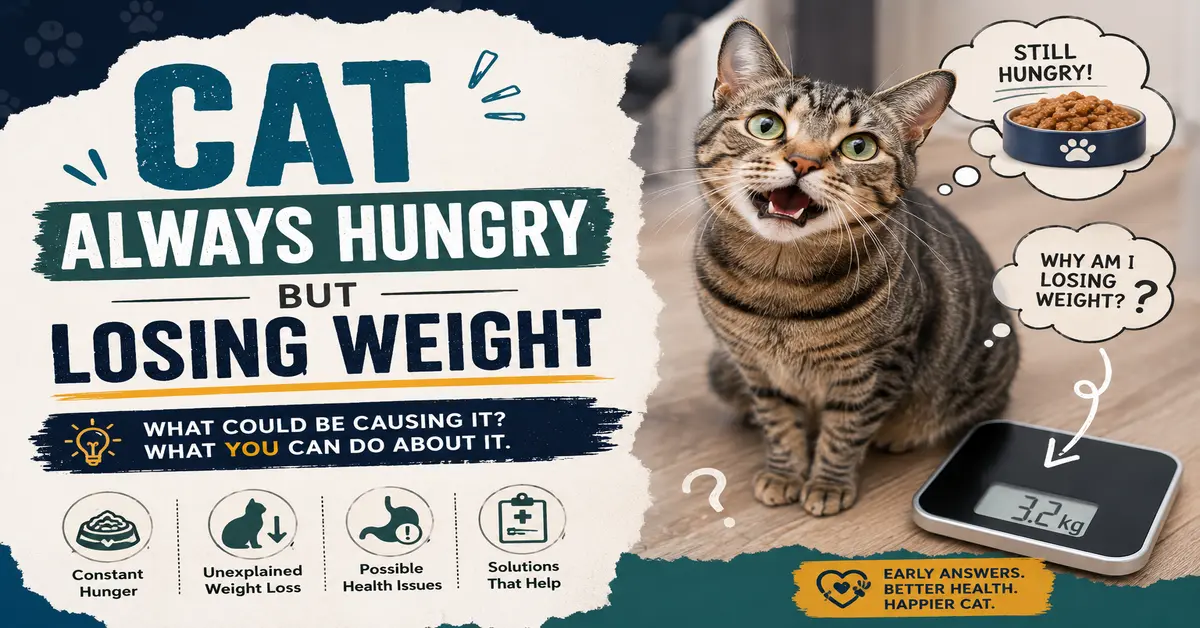
Most cat owners worry when their cat stops eating. But a cat eating more than ever while visibly losing weight is just as concerning and far more confusing.
The body is burning through resources faster than food can replace them. Something is interfering with how your cat absorbs or uses nutrition. That interference has a cause, and in most cases it is one of five specific conditions.
Here is what drives this pattern and what each one means for your cat.
At a Glance: 5 Reasons a Cat Stays Hungry While Losing Weight
| Condition | Key Sign Alongside Hunger | Age Most Affected |
| Hyperthyroidism | Increased thirst, hyperactivity | Senior cats 10 and older |
| Diabetes | Increased urination, lethargy | Middle-aged to senior cats |
| Intestinal parasites | Bloated belly, changes in stool | Any age |
| Malabsorption disorder | Chronic loose stools, dull coat | Any age |
| Inflammatory Bowel Disease | Vomiting, weight loss despite eating | Middle-aged to senior cats |
Why Eating More Does Not Always Mean Gaining Weight
Food provides calories. But calories only benefit the body if the digestive system absorbs them properly and the metabolism uses them at a normal rate.
When a cat eats a lot but keeps getting skinnier, one of two things is happening. Either the metabolism is running far too fast and burning through calories before the body can use them, or the digestive system is failing to absorb nutrients from food properly regardless of how much the cat consumes.
Both scenarios leave the cat in a state of genuine physical need, which the brain interprets as hunger. The cat eats more because the body keeps signaling that it needs more. But without addressing the root cause, more food alone never closes the gap.
Reason 1: Hyperthyroidism Is Driving the Metabolism Too Fast
Hyperthyroidism is the most common hormonal disorder in senior cats and the leading medical reason behind a ravenous cat losing weight. The thyroid gland produces excess hormone, which throws the metabolism into overdrive.
A cat with hyperthyroidism burns through calories at an abnormally high rate. No matter how much they eat, the body consumes energy faster than food can replenish it. The result is relentless hunger alongside steady and often rapid weight loss.
This condition almost exclusively affects senior cats. If your cat is 10 years or older and has developed a suddenly ravenous appetite alongside visible weight loss, hyperthyroidism is the first condition your vet will investigate.
Other Signs to Watch For
Beyond hunger and weight loss, a hyperthyroid cat often becomes unusually vocal, restless, or hyperactive. You may also notice increased thirst, more frequent urination, a rough or unkempt coat, and occasional vomiting. Some cats develop a rapid or irregular heartbeat that a vet can detect during examination.
What to Do
Take your cat to a veterinarian for a thyroid hormone blood test. Hyperthyroidism is highly treatable. Options include daily oral medication, a prescription iodine-restricted diet, radioactive iodine therapy, or surgery depending on the severity and your cat’s overall health status. Early treatment prevents the condition from placing long-term strain on the heart and kidneys.
Reason 2: Diabetes Is Disrupting How the Body Uses Glucose
Diabetes in cats occurs when the body either stops producing enough insulin or stops responding to it properly. Insulin is what allows cells to absorb glucose from food and convert it into usable energy.
Without effective insulin function, glucose accumulates in the bloodstream but never reaches the cells that need it. The cells essentially starve regardless of food intake. The brain responds by triggering intense and persistent hunger. The cat eats more but the body still cannot access the energy it needs, so weight continues to drop.
Diabetes in cats shares recognizable symptoms beyond the hunger and weight loss pattern. Increased water consumption and significantly more frequent urination are among the most consistent early indicators. You may notice the litter box needs changing more often or that your cat visits the water bowl repeatedly throughout the day.
Other Signs to Watch For
A diabetic cat often develops a distinctive weakness in the hind legs over time, causing them to walk with their hocks touching the ground rather than walking on their toes as cats normally do. Lethargy, a dull coat, and intermittent vomiting also appear in more progressed cases.
What to Do
A veterinarian diagnoses feline diabetes through blood glucose testing and urinalysis. Treatment typically involves dietary changes, weight management, and insulin injections administered at home. Many cat owners manage this successfully with proper guidance. Cats diagnosed early and managed consistently can achieve remission in some cases, particularly with a high-protein, low-carbohydrate wet food diet that supports stable blood glucose levels.
Reason 3: Intestinal Parasites Are Stealing Nutrition
Parasites living inside the digestive tract consume nutrients directly from the food your cat eats before the body can absorb them. The cat keeps eating to compensate for the nutritional shortfall, but the parasites continue intercepting a portion of every meal.
Common intestinal parasites in cats include roundworms, tapeworms, hookworms, and giardia. Any cat can develop a parasitic infection regardless of whether they go outdoors, though outdoor cats and cats that hunt carry a higher risk.
A bloated or rounded belly in an otherwise thin cat is a classic visual sign of a significant parasite burden. Changes in stool consistency, visible segments or specks in the stool, and scooting behavior also indicate parasitic activity.
What to Do
Take a fresh stool sample to your veterinarian for analysis. Most intestinal parasites are straightforward to treat with appropriate deworming medication. A single course of treatment often resolves the infection, though follow-up testing confirms full clearance. Regular preventive deworming, particularly in outdoor cats, prevents reinfestation.
Reason 4: A Malabsorption Disorder Is Blocking Nutrient Uptake
Some cats develop conditions that damage the intestinal lining and prevent nutrients from being absorbed properly even when digestion appears normal. Exocrine pancreatic insufficiency is one example, where the pancreas fails to produce enough digestive enzymes to break food down before absorption.
A cat with a malabsorption disorder eats normally or more than normal but passes a significant portion of the nutritional content in their stool unabsorbed. Weight loss is progressive and persistent. Stools are often large, pale, greasy, or particularly foul-smelling due to the undigested fat and protein passing through.
What to Do
Malabsorption disorders require veterinary diagnosis through blood tests, fecal analysis, and sometimes ultrasound or intestinal biopsy. Treatment depends on the specific condition but often involves enzyme supplementation added directly to food, dietary adjustments toward highly digestible formulas, and in some cases medication to address underlying inflammation.
Reason 5: Inflammatory Bowel Disease Is Disrupting Digestion
Inflammatory bowel disease in cats involves chronic inflammation of the gastrointestinal tract that interferes with both digestion and nutrient absorption. The inflamed intestinal lining cannot absorb nutrients efficiently regardless of food quality or quantity.
A cat with IBD often cycles through periods of increased appetite alongside gradual weight loss, intermittent vomiting, and variable stool quality. The condition can be difficult to identify early because the symptoms fluctuate and individually seem manageable.
IBD is more common in middle-aged and senior cats. It sometimes overlaps with or progresses toward a more serious condition called small cell lymphoma, which shares many of the same symptoms and requires biopsy to distinguish from IBD.
What to Do
Veterinary diagnosis involves blood work, ultrasound, and often intestinal biopsy to confirm IBD and rule out lymphoma. Treatment typically combines a limited ingredient or novel protein diet, corticosteroids to reduce intestinal inflammation, and sometimes additional medication depending on severity.
A gradual dietary transition to the prescribed formula is essential for cats with IBD, as abrupt food changes trigger additional gastrointestinal flares in cats with already inflamed digestive systems.
The Link Between Weight Loss and Dehydration
A cat losing weight rapidly loses fluid alongside body mass. Weight loss conditions also tend to increase water demand, particularly hyperthyroidism and diabetes, both of which drive significant fluid loss through increased urination.
A cat that is already hungry and losing weight and that also shows warning signs of dehydration such as dry or tacky gums, sunken eyes, or skin that does not snap back during the skin turgor test needs veterinary attention the same day. Dehydration compounds the effects of any underlying condition and accelerates deterioration.
Moisture-rich wet food supports hydration alongside nutrition for cats managing weight loss conditions. It also tends to be more palatable and digestible than dry kibble for cats whose gastrointestinal systems are under stress.
When to Stop Waiting and See a Vet
A cat always hungry but losing weight despite eating well is showing a clear clinical sign that something is wrong internally. This pattern does not resolve on its own regardless of how much food you offer.
Book a veterinary appointment without delay if your cat has lost noticeable weight over two to four weeks, eats significantly more than usual without gaining weight, drinks more water than normal, vomits regularly, or shows changes in energy, coat condition, or litter box habits alongside the hunger.
A standard senior wellness blood panel covers thyroid hormone levels, blood glucose, kidney and liver function, and other key markers. It screens for the most common causes of this symptom pattern in a single visit and gives your vet a clear starting point for diagnosis and treatment.
Final Thoughts
A ravenous cat that keeps losing weight is not a mystery. It is a cat whose body cannot keep up with what it is being asked to do, and a medical reason is almost always behind it.
The five conditions covered here are all diagnosable and all treatable. The sooner you act, the more options your vet has and the better your cat’s outcome will be.
Your cat is telling you something is wrong in the clearest way they know how. Book the appointment.