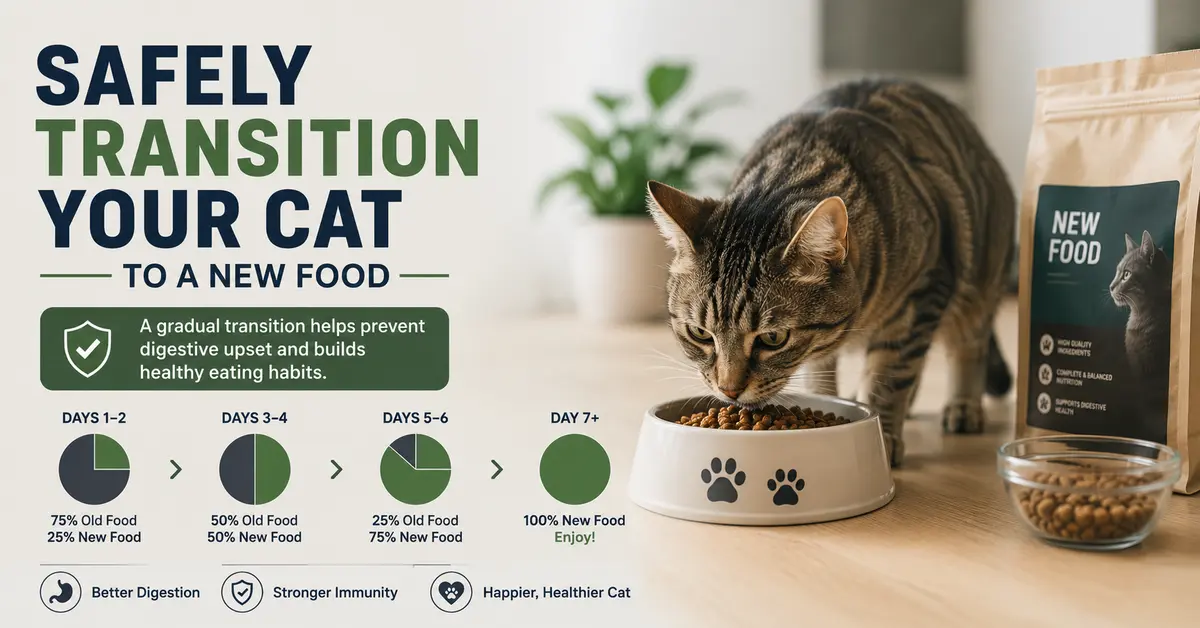
Most cats do not handle food changes well. Switch their food too fast and you will likely deal with vomiting, diarrhea, and a cat that refuses to eat altogether. The good news is that a slow and structured transition prevents almost all of these problems.
This guide walks you through exactly how to switch your cat’s food safely, what to watch for along the way, and how to handle the cats that resist every change you try.
Why Cats React Badly to Sudden Food Changes
A cat’s digestive system relies on a stable population of gut bacteria to break down food efficiently. When you change the food suddenly, the gut bacteria have no time to adjust. This mismatch causes inflammation, loose stools, vomiting, and gas.
Cats also form strong texture and flavor preferences early in life. A cat raised on dry kibble often refuses wet food on the first introduction, not because of taste alone but because the texture feels completely unfamiliar.
Understanding both of these factors helps you approach the transition with the right expectations and the right timeline.
How Long Does a Food Transition Take
A safe food transition takes 7 to 10 days for most healthy adult cats. Senior cats and cats with sensitive stomachs often need 14 days or longer.
Rushing this timeline is the most common mistake cat owners make. A gradual transition protects the digestive system, reduces rejection, and increases the chance that your cat fully accepts the new food by the end of the process.
The 7- to 10-Day Transition Schedule
Follow this schedule as a reliable baseline. Adjust the pace if your cat shows any digestive upset at any stage.
| Day | Old Food | New Food |
| Day 1 to 2 | 75% | 25% |
| Day 3 to 4 | 50% | 50% |
| Day 5 to 6 | 25% | 75% |
| Day 7 to 10 | 0% | 100% |
Mix the foods thoroughly at each stage. Some cats pick around new food if they can identify it separately in the bowl.
Switching From Dry Food to Wet Food
Transitioning a cat from dry kibble to wet or moisture-rich canned food requires extra patience. The texture difference between kibble and wet food is significant, and many cats reject wet food on the first several attempts.
Start With a Topper
Place a small spoonful of wet food on top of the dry kibble rather than mixing it in. This introduces the new smell and flavor without forcing the cat to eat something unfamiliar as the entire meal.
Once your cat consistently eats the topper without hesitation, begin mixing small amounts into the dry food and follow the standard transition schedule from there.
Warm the Wet Food Slightly
Cold wet food straight from the refrigerator has very little aroma. Warming it to just below room temperature releases the natural food scent and makes it significantly more appealing to cats, especially reluctant ones.
Do not microwave wet food directly in the can or pouch. Transfer it to a small bowl first and warm it for a few seconds. Always test the temperature before serving.
Switching Between Two Dry Foods
Switching between two dry foods follows the same 7 to 10 day schedule but is generally easier for most cats to handle. The texture remains familiar, so the main adjustment is flavor and ingredient composition.
Mix the two kibbles thoroughly so your cat cannot selectively eat only the familiar food. Gradually increase the proportion of the new food every two days until you complete the transition.
Switching From Wet Food to Dry Food
Cats switching from wet food to dry food face a different challenge. Dry kibble contains far less moisture, which means your cat’s total fluid intake drops significantly during and after the transition.
Always increase fresh water availability when moving a cat toward a dry food diet. Add a second water bowl or introduce a pet water fountain to compensate for the reduced moisture in meals. Monitor litter box output closely during this transition to catch any early signs of dehydration.
Signs the Transition Is Going Well
Watch for these positive indicators as you move through the schedule:
- Your cat finishes each meal without leaving the new food behind
- Stools remain firm and well-formed throughout the process
- Your cat shows normal energy levels and interest in food
- No vomiting or excessive drooling between meals
These signs tell you the digestive system is adjusting well and you can continue moving through the schedule at the planned pace.
Warning Signs to Slow Down or Stop
Certain symptoms tell you the transition is moving too fast or that something else is wrong.
Loose stools or diarrhea lasting more than two days means you need to go back one step in the schedule and hold that ratio for an additional three to four days before moving forward again.
Vomiting more than once in a 24-hour period requires the same response. Return to the previous ratio and slow the pace.
If your cat stops eating entirely for more than 24 hours, do not push through. Cats that go without food for extended periods risk developing hepatic lipidosis, a serious liver condition. Contact your veterinarian if complete food refusal lasts longer than 24 hours.
How to Handle a Picky Cat That Refuses the New Food
Some cats resist every attempt at introducing new food. These cats need a different approach rather than a faster one.
Use Food Toppers and Flavor Enhancers
A small amount of low-sodium bone broth, tuna water, or a sprinkle of freeze-dried protein on top of the new food makes it far more appealing. Use these only to ease the introduction, not as a permanent addition.
Try a Different Texture or Format
A cat that rejects pate-style wet food may accept shredded or gravy-based varieties more readily. The flavor may be identical but the texture difference alone can change the outcome. Experiment with two or three formats before concluding that your cat dislikes a particular food entirely.
Feed Multiple Small Meals
Hungry cats accept new food more readily than cats with constant access to familiar food. Switch from free feeding to two or three measured meals per day during the transition period. A cat with a healthy appetite at mealtime is far more willing to try something new.
Transitioning Cats With Health Conditions
Safely Transition your cat to a new food with Chronic Kidney Disease, diabetes, urinary issues, or food allergies need veterinary guidance before any food transition. A dietary change for these cats is not just a preference decision. It directly affects their medical management.
Your vet may recommend a specific prescription diet and a custom transition timeline based on your cat’s individual condition. Follow that guidance rather than a general schedule.
What to Do After the Transition Is Complete
Once your cat eats the new food exclusively and consistently, maintain a regular feeding schedule. Avoid introducing further changes for at least 60 days unless medically necessary.
Frequent food changes train cats to expect variety and can make them more resistant to accepting any single food long term. Stability after a successful transition protects the digestive system and reinforces healthy eating habits.
If you plan to rotate between two or three foods for nutritional variety, introduce that rotation gradually after the initial transition is complete and your cat’s digestion has fully stabilized
Final Thoughts
A successful food transition comes down to one principle. Go slower than you think you need to.
Follow the 7 to 10 day schedule, watch your cat’s response at every stage, and adjust the pace when needed. Your cat’s digestive system will thank you, and you will avoid the vomiting, diarrhea, and food refusal that comes with rushing the process.