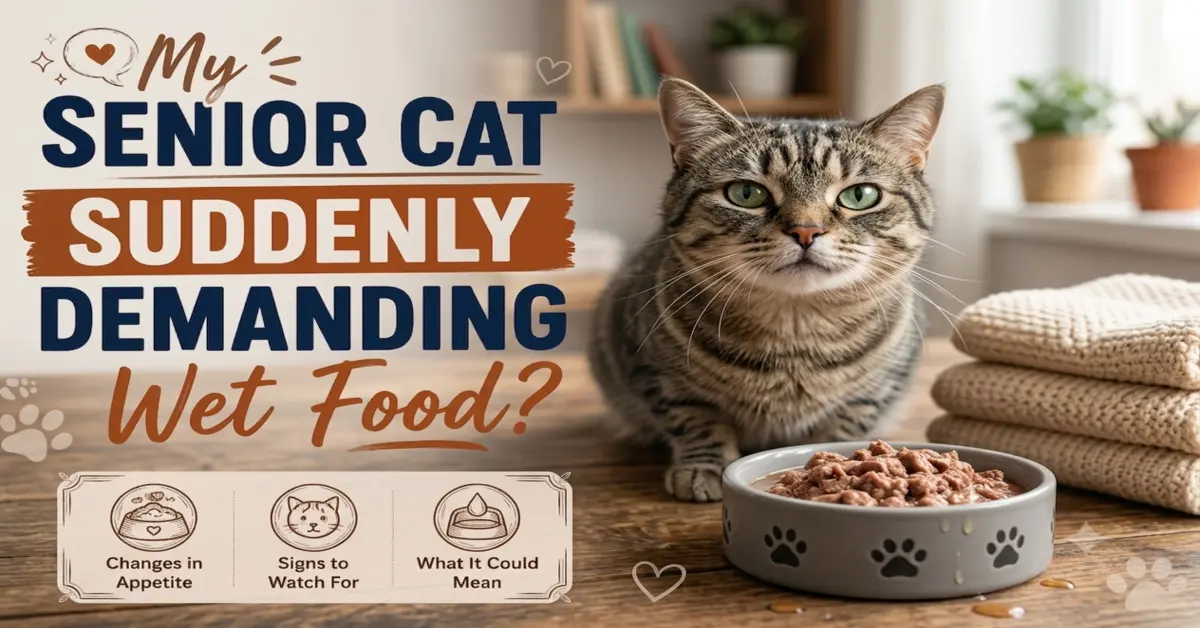
Your senior cat used to eat dry kibble without any fuss. Now they circle the bowl, sniff it, and walk away. They only show interest when you open a can of wet food. This change feels sudden. But in most cases it has been building quietly for months.
A senior cat suddenly wanting wet food is rarely about preference. It is almost always the body communicating a need. Here are the three silent health shifts behind this change and what you should do about each one.
Normal vs. Concerning Appetite Changes in Senior Cats
| Change | Likely Cause | Action Needed |
| Gradual preference for wet over dry | Normal aging process | Switch to wet food |
| Sudden refusal of all dry food | Dental pain or kidney disease | See a vet |
| Eating less overall with weight loss | Illness or sensory decline | See a vet immediately |
| Eating wet food but ignoring dry | Mouth discomfort or dehydration | Monitor and adjust diet |
| Increased appetite alongside wet food demand | Hyperthyroidism or diabetes | See a vet immediately |
Why Senior Cats Change Their Eating Habits
A cat is considered a senior from around 10 years of age. From this point forward, the body goes through a series of gradual changes that directly affect how a cat eats, what it can tolerate, and what it actively seeks out.
These changes do not happen overnight. But owners often notice them suddenly because the shift crosses a threshold where the cat can no longer compensate quietly. What looks like a sudden change in senior cat eating habits is usually the final stage of a longer process.
Three specific health shifts drive most cases of an old cat refusing dry food in favor of wet.
Health Shift 1: Dental Disease Is Making Kibble Painful
Dental disease affects an estimated 70% of cats over the age of 3, and the prevalence increases significantly with age. By the time a cat reaches senior years, the likelihood of painful dental conditions including tooth resorption, gum inflammation, and loose teeth is very high.
Dry kibble requires chewing. For a cat with dental pain, biting down on hard kibble causes direct and immediate discomfort. Wet food requires almost no chewing. It is soft, easy to consume, and does not aggravate sore teeth or inflamed gums.
A senior cat that suddenly only wants wet food and shows any of the following signs is almost certainly dealing with dental disease.
Signs of Dental Pain to Watch For
Watch for your cat dropping food from their mouth while eating, pawing at their face after meals, chewing only on one side, drooling more than usual, or showing visible reluctance to approach the food bowl even when hungry.
What to Do
Book a veterinary dental examination as soon as possible. Dental disease in cats is painful and progressive. It does not resolve on its own. A vet can assess the extent of the damage and recommend appropriate treatment, which in many cases involves a professional cleaning or tooth extraction under anesthesia.
In the meantime, switch fully to moisture-rich wet food to reduce mealtime pain and maintain adequate nutrition.
Health Shift 2: Kidney Disease Is Driving a Thirst for Moisture
Kidney disease is one of the most common conditions in senior cats. As the kidneys lose their ability to concentrate urine efficiently, the body compensates by increasing fluid demand. A senior cat with kidney disease feels chronically thirsty and instinctively gravitates toward food with higher moisture content.
This is why a senior cat only wanting wet food is often one of the earliest behavioral signals of developing kidney disease, sometimes appearing before a formal diagnosis.
Dry kibble contains only 6 to 10% moisture. For a cat whose kidneys are already struggling, a dry food diet accelerates the problem. The body needs significantly more fluid to support kidney function, and kibble simply cannot deliver it.
Other Kidney Disease Symptoms in Cats to Watch For
Increased water consumption, more frequent urination, weight loss despite a reasonable appetite, and occasional vomiting alongside the shift toward wet food all point toward kidney involvement.
What to Do
Do not wait for symptoms to worsen before acting. Take your senior cat to a veterinarian for a blood panel and urinalysis. These tests detect kidney disease at an early stage when dietary intervention is most effective.
In the meantime, support kidney function by switching to wet food immediately and ensuring fresh water is always available. A running water fountain further encourages fluid intake in cats that resist drinking from a static bowl. Your vet may also recommend a prescription kidney diet formulated specifically for cats with renal disease.
Health Shift 3: Aging Senses Make Dry Food Less Appealing
A senior cat’s senses of smell and taste decline gradually with age. Smell drives appetite in cats more than any other sense. As scent detection weakens, food needs to work harder to stimulate interest.
Wet food has a significantly stronger aroma than dry kibble. It delivers more immediate scent signals, which compensate for the reduced sensitivity in an aging cat’s nose. This is why aging cat appetite changes often follow a predictable pattern toward softer, more aromatic, moisture-rich food.
This shift is not a disease. It is a natural consequence of aging. But it still requires a practical response from the owner.
What to Do
Warm wet food slightly before serving to intensify its aroma and make it more appealing. Serve food at room temperature as a minimum. Cold wet food from the refrigerator produces very little scent and often gets rejected even by a cat that normally accepts it willingly.
If your senior cat still shows limited interest in food after warming, try a gradual transition to a new protein or texture to find what works best for their changed palate.
Is It Ever Just a Preference?
Sometimes a senior cat demanding wet food is simply a cat that has learned wet food is available and prefers it. Cats are intelligent and adaptable. If wet food has been offered occasionally as a treat, a senior cat may escalate their demand for it over time.
This preference-based shift is the least concerning scenario. It becomes worth investigating when it appears suddenly, intensifies quickly, or arrives alongside other behavioral or physical changes.
The safest approach with any senior cat is to treat a sudden dietary shift as a potential health signal first, rule out medical causes with a vet, and then proceed with dietary adjustments from a place of informed confidence.
Why Wet Food Is the Right Choice for Most Senior Cats
Regardless of the specific cause behind the shift, wet food supports senior cat health in ways dry kibble cannot match.
It delivers hydration through every meal, supports kidney function, requires minimal chewing, has a stronger aroma that compensates for sensory decline, and is easier to digest for older gastrointestinal systems.
Veterinarians widely recommend wet food as the primary diet for senior cats, particularly those with a history of dehydration, urinary issues, or kidney disease. If your senior cat is asking for wet food, the most straightforward response is to give it to them and speak with your vet about their overall health.
When to See a Vet
Schedule a veterinary appointment if your senior cat suddenly refuses all dry food, loses weight alongside the dietary change, drinks noticeably more water than usual, shows any signs of mouth pain or discomfort, or vomits regularly in addition to changing food preferences.
A senior cat health check every six months is recommended by most veterinarians for cats aged 10 and above. Catching conditions like dental disease and kidney disease early makes a significant difference in outcomes and quality of life.
The Bottom Line: Listen to What Your Senior Cat Is Telling You
A senior cat refusing dry food and demanding wet food is not being difficult. They are responding to real physical changes that deserve attention.
Check for dental pain, ask your vet about kidney function, and make the switch to wet food without delay. It is one of the most practical and impactful decisions you can make for a senior cat’s health and comfort.