You switched your cat to wet food expecting better health outcomes. Instead you are dealing with loose stools, a messy litter box, and a worried cat. This is more common than most owners realize and in the majority of cases it is completely fixable.
Wet cat food giving your cat diarrhea is not a sign that wet food is wrong for your cat. It is usually a sign that something specific went wrong in how it was introduced or what it contains. Here is what causes it and exactly how to fix it.
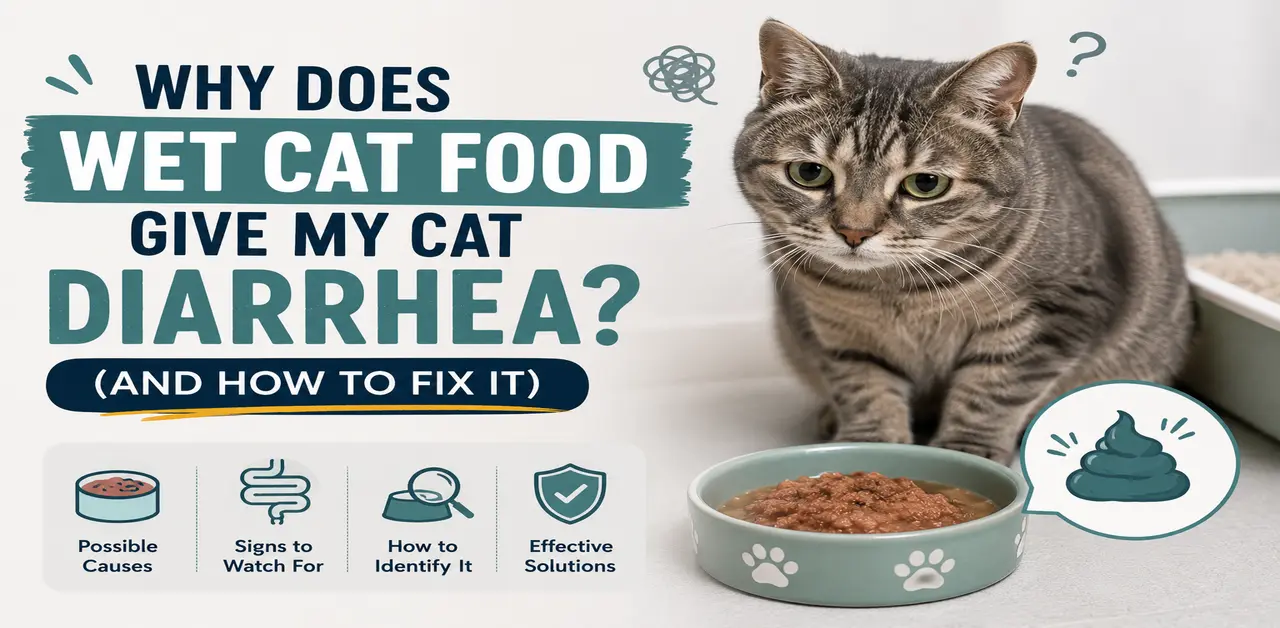
Quick Diagnosis: What Is Causing the Diarrhea?
| Cause | How to Identify | Solution (Fix) |
| Switched food too fast | Diarrhea started within 1 to 3 days of the switch. | Slow down the transition |
| Food intolerance or allergy | Diarrhea persists despite slow transition | Try a limited ingredient food |
| Too much fat in the formula | Loose stools after every meal | Switch to a lower fat formula |
| Food served too cold | Loose stools shortly after eating | Serve food at room temperature |
| Overfeeding | Large loose stools after big portions | Reduce portion size |
| Bacterial contamination | Sudden severe diarrhea with vomiting | See a vet immediately |
Reason 1: You Switched to Wet Food Too Quickly
This is the single most common cause of diarrhea when introducing wet cat food. A cat’s digestive system relies on a stable community of gut bacteria calibrated to the food it currently eats. Introduce a new food abruptly, and those bacteria have no time to adjust.
The result is digestive inflammation, loose stools, and in some cases vomiting. The cat is not reacting to wet food specifically. It is reacting to the speed of the change.
How to Fix It
Go back to your cat’s previous food entirely for two to three days until stools firm up. Then restart the transition using a gradual 7 to 10 day schedule, increasing the wet food proportion slowly every two days. This gives the gut bacteria the time they need to adapt without triggering further upset.
If diarrhea returns even on a slow transition, the cause is something other than transition speed.
Reason 2: The Wet Food Contains an Ingredient Your Cat Cannot Tolerate
Food intolerances in cats are more common than most owners expect. Common triggers include certain proteins such as beef or fish, artificial additives, carrageenan, and high levels of certain grains or legumes used as fillers in lower quality wet food formulas.
Unlike a food allergy, which involves an immune response, a food intolerance causes direct digestive irritation. The cat does not need to be exposed to the ingredient repeatedly before reacting. Even a single meal containing a problematic ingredient can trigger loose stools.
How to Fix It
Switch to a limited ingredient wet food that contains a single named protein source your cat has not eaten before. Novel proteins such as duck, rabbit, or venison work well for elimination trials. Stick with the new food for at least four weeks before drawing conclusions about whether the intolerance has been resolved.
Avoid foods containing carrageenan, a common thickening agent in wet food that research links to gastrointestinal inflammation in some cats.
Reason 3: The Formula Is Too Rich or Too High in Fat
Some wet food formulas, particularly those marketed as premium or high protein, contain fat levels that exceed what a cat’s digestive system can handle comfortably. This is especially true for cats that previously ate a low-fat dry kibble diet.
High fat content draws water into the intestines and accelerates gut motility, producing loose or watery stools shortly after eating. The cat is otherwise healthy, but the formula is simply richer than their system can process efficiently.
How to Fix It
Check the guaranteed analysis panel on the wet food label. Look for a formula with moderate fat content. Compare it with what your cat ate previously and look for a wet food closer to that fat percentage as a starting point.
A gradual transition from the richer formula to a more moderate one follows the same 7 to 10 day schedule and prevents further digestive disruption during the switch.
Reason 4: You Are Serving the Food Too Cold
Cold wet food from the refrigerator does more than reduce aroma. It also shocks the digestive system of some cats, particularly those with sensitive stomachs. The sudden temperature difference between cold food and the warm gastrointestinal tract accelerates gut movement and produces loose stools.
This cause is easy to overlook because owners assume the food quality is the problem when the issue is simply temperature.
How to Fix It
Always serve refrigerated wet food at room temperature or slightly warmer. Remove it from the refrigerator 10 to 15 minutes before serving or warm it briefly in a microwave-safe bowl. Stir thoroughly and test the temperature before placing it in the bowl. Aim for lukewarm, never hot.
Reason 5: You Are Overfeeding
Wet food has a much higher moisture content than dry kibble, which means portion sizes look and feel different. Many owners continue feeding the same volume they used for dry food when switching to wet, which results in significant overfeeding.
Too much food at once overwhelms the digestive system and produces large, loose stools. This is not an intolerance or illness. It is simply more food than the gut can process efficiently in one sitting.
How to Fix It
Check the feeding guidelines on the wet food packaging and adjust portions based on your cat’s body weight and activity level. Split the daily allowance into two or three smaller meals rather than one large serving. Smaller, more frequent meals are easier on the digestive system and reduce the likelihood of loose stools from volume alone.
Reason 6: The Wet Food Has Been Left Out Too Long
Wet food left in the bowl beyond two hours at room temperature develops bacterial growth rapidly. A cat that returns to a bowl of food that has been sitting out for several hours and eats it is consuming food that has already started to spoil.
Bacterial contamination from spoiled food causes sudden and sometimes severe diarrhea, often accompanied by vomiting and lethargy.
How to Fix It
Remove uneaten wet food after two hours without exception. Refrigerate unused portions from the same can or pouch and use them within 24 hours. Wash the food bowl thoroughly between servings to prevent bacterial residue from accumulating on the surface.
When Diarrhea Becomes a Veterinary Emergency
Most cases of wet food-related diarrhea resolve within a few days once the cause is identified and addressed. However, certain situations require immediate veterinary attention.
Take your cat to a vet the same day if diarrhea contains blood or is completely watery, your cat vomits repeatedly alongside the diarrhea, your cat shows signs of dehydration such as dry gums, sunken eyes, or skin that does not bounce back during the skin turgor test, your cat becomes lethargic or stops eating entirely, or diarrhea persists for more than 48 hours without improvement.
Diarrhea causes rapid fluid and electrolyte loss. A cat experiencing persistent diarrhea alongside reduced water intake is at serious risk of dehydration, which compounds quickly and requires veterinary intervention to reverse safely.
How to Firm Up Your Cat’s Stools While Transitioning
If your cat tolerates wet food but stools remain slightly loose during the transition period, a few practical steps help firm them up without stopping the transition entirely.
Add a small amount of plain canned pumpkin to the wet food. Pumpkin is high in soluble fiber which absorbs excess water in the intestines and firms loose stools naturally. Use no more than one teaspoon per meal and ensure it contains no added sugar or spices.
A veterinarian-recommended probiotic formulated for cats supports gut bacteria balance during dietary transitions and reduces the duration of transition-related digestive upset.
Slow the transition pace if stools remain consistently loose. Hold the current wet to dry ratio for an additional three to four days before increasing the wet food proportion further.
Frequently Asked Questions (FAQs)
Is it normal for cats to get diarrhea when switching to wet food?
Mild loose stools for the first few days of a food transition are relatively common. Full diarrhea lasting more than two days is a sign that the transition is moving too fast or that the specific formula contains something the cat cannot tolerate. Slow the transition and assess the ingredient list.
How long does diarrhea last after switching cat food?
Transition-related diarrhea typically resolves within two to four days when the pace is slowed and the cat returns to a higher proportion of its previous food. If diarrhea continues beyond four to five days despite slowing the transition, a veterinary visit is the right next step.
Can wet cat food cause long-term diarrhea?
Wet food does not cause chronic diarrhea in cats that tolerate it well. Persistent diarrhea linked to wet food usually indicates a specific ingredient intolerance, an underlying gastrointestinal condition, or a formula that is too rich for that individual cat. A limited ingredient diet trial and veterinary evaluation help identify the specific cause.
What is the best wet food for cats with sensitive stomachs?
Look for limited ingredient wet food with a single named protein source, no artificial additives, no carrageenan, and moderate fat content. Novel proteins such as duck, rabbit, or venison work well for cats with a history of food sensitivities. Your vet can recommend prescription gastrointestinal formulas for cats with more serious digestive conditions.
Should I stop giving wet food if my cat gets diarrhea?
Not immediately. First identify the likely cause using the table at the top of this article. If the transition was too fast, slow it down rather than stopping entirely. If a specific ingredient is the problem, switch formulas rather than abandoning wet food altogether. Wet food offers too many health benefits, particularly for hydration and kidney support, to eliminate without first identifying and addressing the root cause.
Final Thoughts
Diarrhea after introducing wet cat food almost always has a specific and fixable cause. Start by slowing the transition, checking the ingredient list, adjusting portion sizes, and serving food at the right temperature.
If none of these fixes resolve the issue within a few days, your vet can identify whether an underlying condition or specific intolerance is driving the problem.
Wet food remains one of the best dietary choices for most cats. The goal is finding the right formula and the right introduction pace for your individual cat.